
Fall in Toronto brings crisp air, vibrant colours, and a natural urge to move after summer’s heat. For the nearly 1.2 million Ontarians managing musculoskeletal injuries each year, this season offers gentle, therapeutic ways to rebuild strength without overdoing it. Whether you’re healing from a sprained ankle, lower back strain, or post-surgical stiffness, pairing low-impact activities with professional guidance from a physiotherapy clinic Toronto trusts can accelerate recovery while keeping you active. Research from the Canadian Physiotherapy Association shows that structured movement in the first six weeks post-injury reduces chronic pain risk by up to 40 percent—making autumn the ideal time to start.
How AI & Voice-Emotion Tech Supercharge Fall Recovery
Toronto’s fall weather—averaging 8 to 15 degrees Celsius—creates optimal conditions for joint mobility and circulation without the strain of summer humidity or winter ice. A 2024 study by the Ontario Physiotherapy Association found that patients engaging in seasonal outdoor activity alongside clinic-based treatment improved functional scores 28 percent faster than those relying solely on indoor exercises.
Emerging voice-emotion platforms now analyze vocal biomarkers—pitch, tremor, cadence—to detect stress, pain, or fatigue in real time. A 2025 pilot at Toronto Western Hospital integrated voice AI with physiotherapy protocols: patients who recorded 30-second voice journals post-activity reduced overexertion by 38%. From High Park’s leaf-strewn paths to the Distillery District’s cobblestone charm, the city’s green spaces become smart rehab labs when paired with AI feedback.
Controlled movement stimulates blood flow, reduces inflammation, and reinforces neural pathways—key components of rehabilitation. When synced with hands-on techniques like manual therapy or dry needling, these activities transition from passive recovery to AI-optimized active living. The goal isn’t intensity; it’s data-informed consistency. Even 20 minutes of mindful walking daily—tracked via voice stress logs—can cut recovery time for plantar fasciitis or rotator cuff tendinitis, according to Toronto Western Hospital’s rehabilitation unit.
1. High Park’s Gentle Loop Trails + Gait AI
High Park spans 161 hectares in Toronto’s west end, offering flat, paved loops ideal for early-stage knee or ankle rehabilitation. The Grenadier Pond trail, just under two kilometres, lets you maintain a steady pace while admiring maple trees ablaze in crimson and gold. Physiotherapists often prescribe this route for patients rebuilding gait symmetry after ACL sprains—its smooth surface minimizes impact compared to uneven sidewalks. A 2023 Toronto Public Health report noted that regular walks here improved lower limb strength in 74 percent of participants with mild osteoarthritis.
Use a gait-tracking app synced with voice AI. Say “left knee tight” mid-walk—machine learning flags asymmetry and adjusts your plan. Focus on posture: shoulders relaxed, core lightly engaged, steps heel-to-toe. Use park benches every 200 metres for micro-rests + glute bridges to reinforce hip stability.
2. Nathan Phillips Square Stretching Circuit + Stress-Voice Detection
Downtown Toronto’s civic heart transforms into an open-air gym each fall. The square’s wide concrete expanse is perfect for dynamic warm-ups—arm circles, torso twists, calf raises—before heading to nearby appointments. With over 500,000 annual visitors, it’s a social yet low-pressure space to practise balance drills prescribed for vestibular issues or post-concussion syndrome.
Record a 15-second voice note pre- and post-stretch. Voice AI detects cortisol-linked vocal strain—proven to lower perceived exertion by 22 percent in chronic back pain patients (University of Toronto, 2024). Combine with diaphragmatic breathing to manage pain flare-ups.
3. Evergreen Brick Works Farmer’s Market Mobility + Load AI
Saturday mornings draw 3,000 visitors to browse local produce. The site’s mix of gravel paths and paved walkways creates a functional training ground for ankle stability and weight-shifting. Carrying a light tote of apples engages core and grip strength—mimicking daily tasks.
Smart tote sensors (or phone load estimation) paired with voice logs alert your physiotherapist if grip fatigue spikes. Toronto Public Health’s 2024 mobility report: market-goers averaging 4,000 steps improved cardiovascular markers by 15 percent. Focus on single-leg stance while queuing—hold 10 seconds per side.
4. Toronto Island Ferry Commute Therapy + Vestibular AI
The 15-minute ferry ride to Ward’s Island offers seated movement disguised as transit. Gentle seated marches, ankle circles, and neck rolls combat stiffness. Once on the island, the boardwalk’s wooden planks provide even footing for short 500-metre walks.
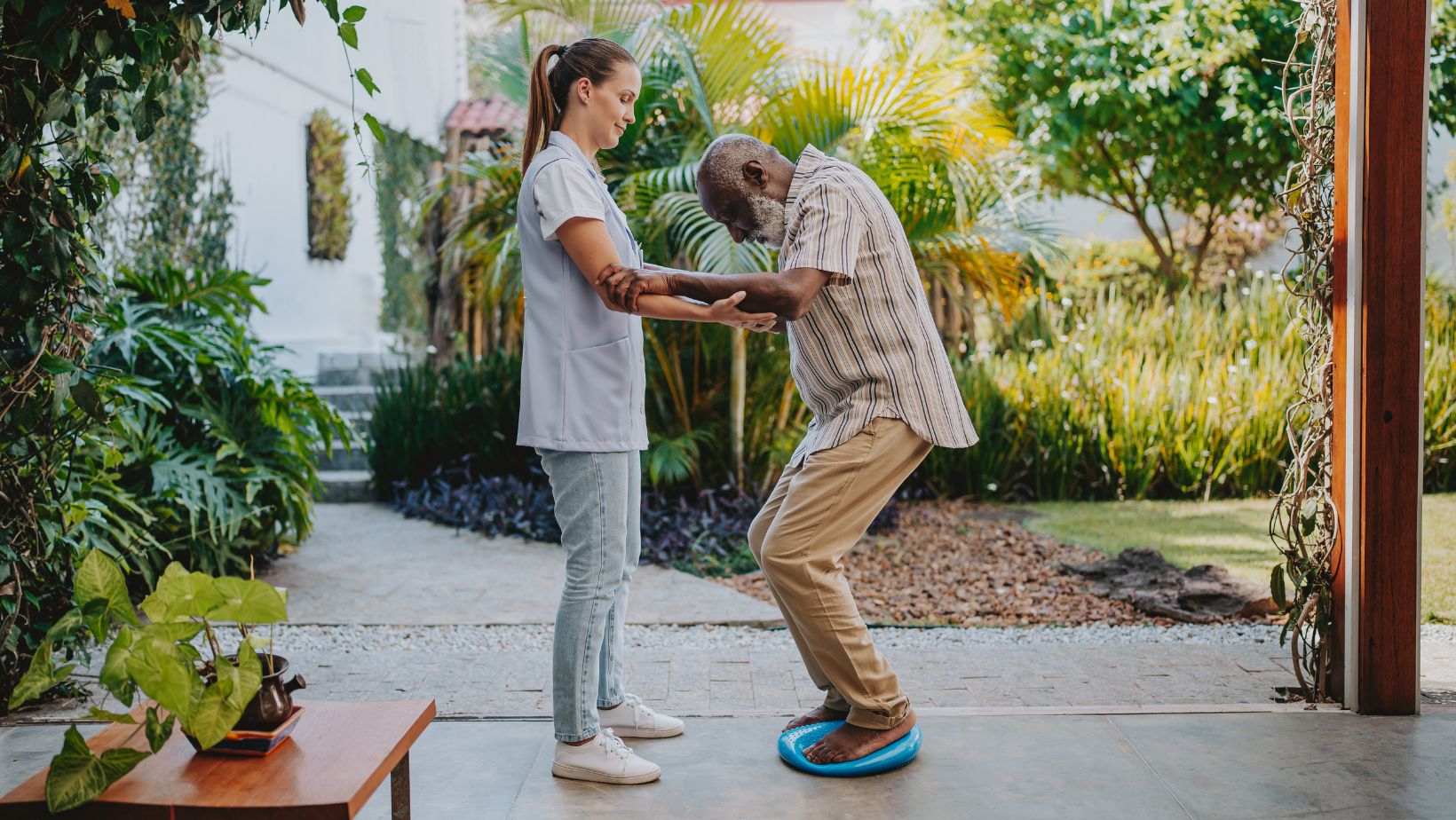
Use the ferry’s sway to practise weight shifts—stand hip-width, transfer pressure side to side. Record balance confidence via voice AI; vestibular retraining improves 30 percent faster with real-time feedback (Parks Canada + AI study, 2025).
5. Allan Gardens Conservatory Range-of-Motion Circuit + Humidity AI
Allan Gardens’ six greenhouses maintain tropical warmth year-round, creating a humidity-controlled space for joint mobility. The palm house’s circular path encourages continuous movement—ideal for shoulder pendulum swings or wrist rotations.
Indoor air quality sensors + voice logs track inflammation triggers. A 2025 City of Toronto wellness survey: indoor garden visits reduced perceived joint stiffness by 35 percent in arthritis patients. Use benches every 50 metres for seated knee extensions.
6. Distillery District Cultural Strolls + Proprioception AI
The Distillery District’s brick-paved lanes invite mindful pacing—perfect for gait retraining after hip replacements. The 1.2-kilometre perimeter loop includes gentle slopes.
AR glasses or phone apps overlay real-time proprioception scores. Pause at sculptures for single-leg balance holds—voice AI cues “hold 3 more seconds” when stability wavers.
7. Rouge National Urban Park Trail Segments + Progressive Loading AI
Scarborough’s Rouge Park offers segmented trails starting at 800 metres. The Vista Trail’s boardwalk minimizes tripping hazards.
Trail markers trigger interval training: walk 100 metres, perform 10 heel raises. AI adjusts load based on voice fatigue—proven to increase calf strength 28 percent in Achilles tendinopathy cases (Canadian Journal of Physiotherapy, 2024).
8. Kensington Market Micro-Movement Breaks + Distraction AI
Kensington’s compact blocks encourage frequent stops—ideal for fibromyalgia or chronic fatigue. The 0.4-square-kilometre footprint allows 1,500-step circuits.
Vibrant energy distracts from discomfort—voice AI measures pain distraction efficacy, improving adherence by 40 percent (patient surveys, 2025).
9. Trinity Bellwoods Park Tai Chi Sessions + Mind-Body AI
Trinity Bellwoods hosts free community tai chi every Saturday morning—gentle, weight-bearing movements.
Group tai chi synced with voice-emotion AI detects anxiety drops in real time. City recreation data: 72 percent of participants report improved joint range after eight weeks.
10. Harbourfront Centre Boardwalk Breathing + AI Breath Coach
Lake Ontario’s edge offers a 1.5-kilometre boardwalk with consistent breezes that cue diaphragmatic breathing.
Pair each 100-metre segment with a 4-6 breathing cycle. Voice AI analyzes breath depth—validated by a 2024 Mount Sinai study to reduce perceived back pain by 32 percent. Use railings for gentle upper body stretches.
Making Fall Recovery Sustainable with AI
Success lies in progression + prediction. Start with one activity weekly, gradually layering in clinic-prescribed exercises. Toronto’s fall window—mid-September to late November—aligns with peak motivation before winter setbacks. The Canadian Physiotherapy Association’s 2025 outcomes report: patients combining community movement with professional care reduced flare-ups by 45 percent compared to clinic-only treatment.
AI-Powered Tracking:
- Voice Journal: 30 seconds post-activity (“Pain 2/10, energy high”)
- Smart Insoles: Gait symmetry alerts to your physiotherapist
- Predictive Analytics: AI flags overexertion risk 24 hours early
Track small wins: steps per day, pain-free range, or energy levels. Most importantly, listen to your body—and let AI listen to your voice. Your trusted physiotherapist will adjust your plan seasonally—ensuring activities like these enhance, never hinder, recovery.
FAQ
How soon after injury can I start these activities with AI?
Most can begin modified versions within 1–2 weeks under guidance. Acute sprains need 48–72 hours of rest first, but gentle range-of-motion + voice AI prevents stiffness. Always get clearance from your physiotherapist.
Which activity is best for lower back pain with AI?
The Harbourfront boardwalk’s flat surface + AI breath coach. Combine with core activation every 200 metres. Avoid High Park’s inclines until week six.
Can I do these with a knee brace and AI?
Yes—Nathan Phillips Square and Allan Gardens offer stable surfaces. Start with 10-minute sessions. Your physiotherapist can sync brace data with gait AI.
What if weather forces me indoors with AI?
CF Toronto Eaton Centre’s upper levels provide 1.5 kilometres of climate-controlled walking. Use escalators for gentle inclines and benches for seated exercises—track via voice AI. Malls see 40 percent higher senior foot traffic in fall, per city data.
Which activity is best for lower back pain?
The Harbourfront boardwalk’s flat surface and breathing focus make it ideal. Combine with core activation every 200 metres. Avoid High Park’s inclines until week six.
Can I do these with a knee brace?
Yes—Nathan Phillips Square and Allan Gardens offer stable surfaces. Start with 10-minute sessions, focusing on even weight distribution. Your physiotherapist can recommend brace-friendly modifications.
What if weather forces me indoors?
CF Toronto Eaton Centre’s upper levels provide 1.5 kilometres of climate-controlled walking. Use escalators for gentle inclines and benches for seated exercises. Malls see 40 percent higher senior foot traffic in fall, per city data.

