
Cappadocia is often narrated from above: a wide valley, pale tuff ridges, and a sunrise horizon punctuated by floating silhouettes. That aerial perspective is undeniably dramatic, but it can flatten the region into a single visual idea—beautiful, photogenic, and strangely detached from the human decisions that made it habitable. To understand Cappadocia as a lived landscape rather than a backdrop, it helps to stay on the ground long enough to see the quieter engineering, the devotional architecture, and the village rhythms that hold the place together.
At street level, the region reads differently. Distances feel longer, slopes feel steeper, and the soft stone that looks whimsical from afar becomes a practical material with constraints and possibilities. In the evening, when the day’s sightseeing energy dissipates, some travelers drift toward distractions—scrolling, chatting, or clicking into funky time game online between plans—yet the more enduring story is the one told by tunnels, chapels, and kitchens, all shaped by geology and necessity.
The Underground Cities as an Architecture of Risk Management
The underground cities of Cappadocia are frequently framed as curiosities: elaborate warrens carved into rock, with narrow corridors and low ceilings that compel modern bodies to stoop. But analytically, they are better understood as risk-management infrastructure. These subterranean complexes were not built for comfort; they were built for survival under conditions of recurring insecurity. The design logic—multiple levels, choke points, rolling stone doors, ventilation shafts—suggests a social system that anticipated threat and organized collective refuge at scale.
What is striking is the sophistication of the planning given the material. Cappadocia’s volcanic tuff is relatively soft when carved yet can harden when exposed to air, allowing rooms and passages to be expanded with simple tools and maintained over generations. Underground space becomes, in effect, a form of stored resilience. It is labor-intensive to create, but it is also discreet, climatically stable, and defensible. The cities reflect a long-term calculation: invest in hidden capacity now to reduce the worst-case outcomes later.
Even the less theatrical details—storage areas, communal rooms, and animal stalls—point to a pragmatic objective. A refuge is only useful if it can sustain life for days or weeks. That means food preservation, water access, and some degree of sanitation. The underground cities tell you that Cappadocia’s history is not only about monastic devotion and scenic valleys; it is also about communities engineering continuity amid disruption.
Rock-Cut Churches: Where Geology Meets Theology
Cappadocia’s rock-cut churches offer another form of ground-level clarity. From a distance, they can look like modest openings in cliffs. Up close, they reveal an expressive interior world: barrel vaults, apses, painted saints, and symbolic programs that guided worshippers through doctrine and story. These spaces matter not only for their artistry but for what they demonstrate about adaptation. The landscape itself becomes the building envelope, and the “construction” is an act of subtraction—hollowing out stone to create a sacred volume.
This architectural approach has consequences. Rock-cut churches are intimate, with acoustics that concentrate sound and emphasize chant or prayer. They are also vulnerable: moisture, soot, and human touch can erode frescos over time. Preservation is therefore inseparable from tourism management. When too many visitors pass through fragile interiors, the very act of appreciation becomes a mechanism of damage.
Analytically, the churches show how belief systems embed themselves in available materials. In a place where stone is plentiful and timber is comparatively scarce, carving is not merely aesthetic; it is logical. The resulting sacred spaces are inseparable from the terrain, which helps explain why Cappadocia’s spiritual history feels so physically anchored. The faith is, quite literally, in the rock.
The Villages: Livelihoods in a Landscape of Soft Stone and Hard Seasons
To see Cappadocia beyond its spectacle, spend time in its villages—places where daily life is shaped by weather, harvest cycles, and the practical constraints of rural economies. In many settlements, houses and storage spaces integrate with the terrain: carved rooms, stone-walled courtyards, and outbuildings that respond to winter cold and summer heat. The region’s climatic extremes make insulation and thermal stability important, and the ground itself can serve as a temperature moderator.
Village life also illustrates how tourism reorganizes local labor. Hospitality work, guiding, and transport can offer higher cash incomes than agriculture alone, but they also introduce seasonal volatility and dependency on external demand. In practice, many households diversify: a relative works in accommodation, another maintains orchards or vineyards, someone else produces preserves or handicrafts for visitors. This hybrid economy can be resilient, but it can also strain social life when work hours are long and the “high season” crowds compress private space.
A useful lens here is to treat tourism not as a moral issue—good or bad—but as a structural force. It changes property values, shifts the meaning of “central” streets, and incentivizes certain kinds of renovation over others. The villages become places where heritage, opportunity, and displacement can all coexist in uneasy balance.
Food, Courtyards, and the Social Micro-Rituals of Belonging
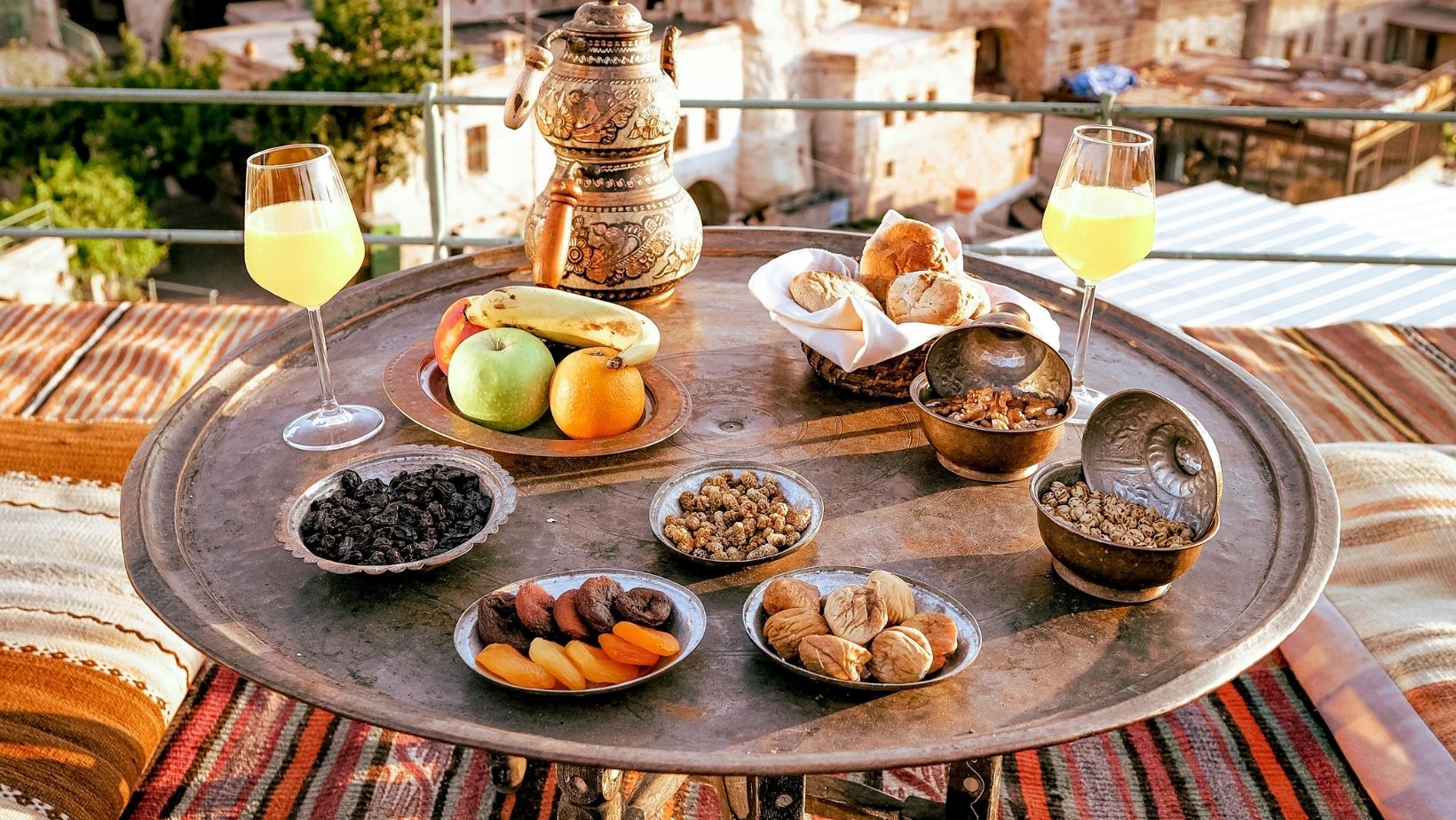
If underground cities express collective security and churches express collective belief, village food culture expresses collective continuity. Ground-level Cappadocia is full of small, repeated practices: bread baked and shared, stews that simmer slowly, tea offered as punctuation between tasks. These are not merely quaint customs; they are social technologies that maintain trust and neighborliness in places where everyone is visible to one another.
Courtyards matter here. In many villages, the courtyard is a semi-public buffer—private enough for household work, open enough for conversation across walls and gates. A passerby greeting, a brief exchange about weather or crops, an invitation to sit for a few minutes—these micro-rituals are how communities regulate warmth without requiring formal intimacy. They also provide a counterweight to the anonymity that visitors sometimes bring.
From an analytical standpoint, these rituals function as low-cost social infrastructure. They reduce friction, distribute small favors, and keep relationships active. In regions undergoing rapid change, such practices can be stabilizing, even when economic structures are shifting.
How to Experience Cappadocia Without Treating It as a Single Image
A ground-level approach is less about avoiding famous viewpoints and more about resisting a one-dimensional itinerary. Practical strategies help: visit an underground site early when your attention is sharp; pair a rock-cut church visit with time outdoors to notice how the cliff face determines the interior; choose one village and linger rather than hopping between photo stops. Pay attention to mundane logistics—water, storage, pathways—because these details reveal the hidden intelligence of the landscape.
Most importantly, interpret Cappadocia as a system. The underground cities are a response to risk. The churches are a negotiation between devotion and material constraints. The villages are living institutions adapting to a tourism economy while preserving social cohesion through everyday ritual. When you view the region this way, the balloons become what they always were: a spectacular layer, not the whole story.

